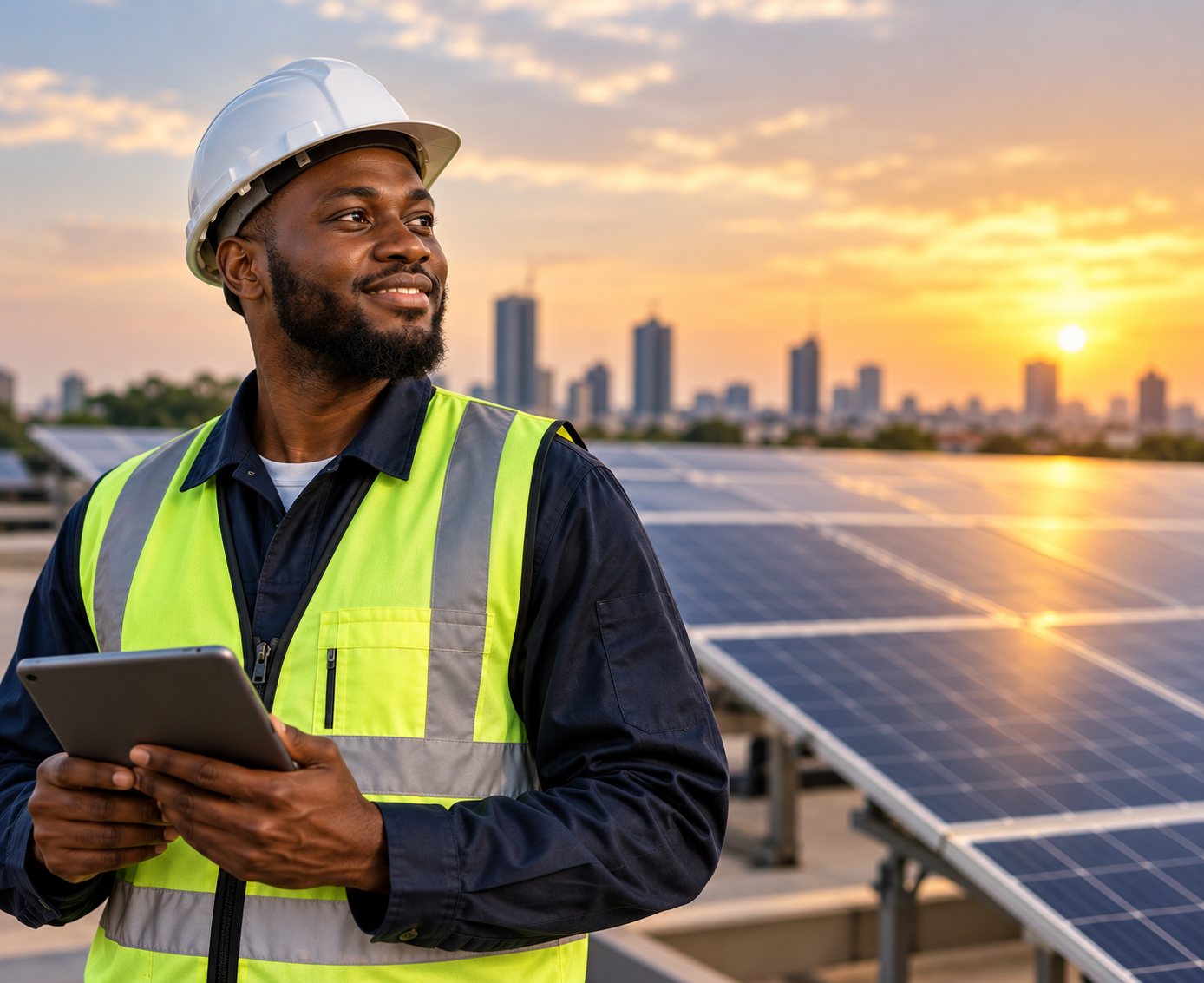

Born from a Perennial Problem.
Built for Permanent Change.
An indigenous Nigerian company that emerged from over 60 years of Nigeria's unresolved power crisis — armed with engineering expertise, data intelligence, and a conviction that the answer lies in renewable energy integration across the full value chain.
Nigeria's Power Sector: A 60-Year Story
Nigeria's electricity crisis is not a new problem. It is a decades-long structural failure that has defined how every Nigerian home, every business, and every community experiences daily life. Understanding this history is essential to understanding why Energy Metrics Africa exists — and why the renewable energy value chain is the only credible path forward.
From the colonial era to the present day, Nigeria's power sector has been characterised by a persistent and widening gap between what the nation needs, what has been promised, and what has actually been delivered. Energy Metrics Africa was born from this frustration — and built to be part of the solution, through on-grid, off-grid, and mini-grid renewable energy integration.
Africa's Largest Energy Access Deficit
Nigerians without grid electricity — 43% of the population
Actual daily generation vs. 13,000MW installed capacity
Spent annually on diesel generators by businesses and households
Rural electrification rate — only 1 in 4 rural Nigerians has power
Nigeria generates approximately 5,000MW for a population of 220 million people. Over 10,000MW of installed capacity sits stranded due to gas shortages and transmission bottlenecks. The economic cost of outages reaches $26 billion annually.
The Renewable Energy Opportunity
Nigeria's Energy Commission projects demand of 100,000MW+ by 2030. The fastest path is distributed solar, mini-grids, and smart off-grid systems — not waiting for grid extension to reach 85 million unserved Nigerians.
From 1898 to Today
First Generating Plant — Lagos
Nigeria's first electricity generating plant installed in Lagos by the colonial administration. Power remains a privilege available only to colonial offices and wealthy households. Scattered, uncoordinated undertakings begin a pattern that will persist for decades.
ECN & Niger Dam Authority Established
The Electricity Corporation of Nigeria (ECN) formed in 1951 to centralise generation and distribution. The Niger Dam Authority (NDA) follows in 1962 — together forming the institutional foundation of Nigeria's power sector.
NEPA — National Electric Power Authority
ECN and NDA merged via Decree 24 to form NEPA — a vertically integrated monopoly for generation, transmission, and distribution. Despite initial capacity of ~6,200MW, NEPA becomes synonymous with chronic outages and institutional inefficiency. Nigerians rebranded the acronym: "Never Expect Power Always."
Reform Era — EPSR Act & NERC
The Electric Power Sector Reform Act 2005 establishes NERC as an independent regulator and creates PHCN from NEPA — unbundled into 18 successor companies: 6 GenCos, 11 DisCos, and the Transmission Company of Nigeria (TCN).
Privatisation — DisCos & GenCos Handed Over
PHCN formally privatised. Generation and distribution companies handed to private investors. Private ownership was expected to catalyse investment and efficiency — results that remain inconsistent over a decade later.
Mini-Grid Regulations & Off-Grid Momentum
REA's Mini-Grid Regulations 2016 (amended 2021) create a licensing and viability gap funding framework. The World Bank DARES programme begins channelling development finance into distributed renewables. Off-grid solar and mini-grids emerge as Nigeria's fastest-growing energy segment.
Electricity Act 2023 — Decentralisation
Nigeria's most significant electricity legislation since 2005. Decentralises the market, empowers state governments to establish independent electricity markets, and strengthens the legal framework for mini-grids, embedded generation, and renewable energy investment — opening the door for companies like Energy Metrics Africa to scale.
Energy Metrics Africa — Born from the Problem
Energy Metrics Africa Limited founded in Lagos by certified engineer Demilade Olujide Babajide. An indigenous Nigerian company built directly from over six decades of unresolved power challenges. Armed with engineering expertise, IoT analytics, and a clear roadmap for renewable energy integration — we are not waiting for the grid to be fixed. We are building the alternative.
What We Have Already Built
In the interim period since our founding, Energy Metrics Africa has not waited for perfect conditions. We have deployed real systems, for real clients, solving real energy problems — contributing meaningfully to the value chain across residential and industrial segments while building toward our community mini-grid programme.
Our work spans the full renewable energy integration spectrum: on-grid systems that maximise solar-to-grid interaction, off-grid hybrid systems that deliver total energy independence, and the mini-grid infrastructure pipeline that will power entire underserved communities across Northern Nigeria.
Every installation is a data point. Every data point refines our engineering. This is how indigenous engineering companies change their countries — one installation at a time.
Inverter System Capacity Installed
Hybrid inverter systems deployed across residential, light industrial, and commercial client installations.
Battery Storage System Deployed
Lithium Iron Phosphate (LiFePO4) storage — the safest, most cycle-stable chemistry for long-term energy independence.
Solar PV Capacity Installed
Monocrystalline panels commissioned and generating clean energy — displacing diesel and reducing costs for every client.
Contributing Across the Full Energy Value Chain
Through on-grid, off-grid, and mini-grid renewable energy integration — Energy Metrics Africa contributes across the full electricity value chain, from individual homes to community-scale infrastructure.
From Lagos to All of Nigeria
Energy Metrics Africa did not raise grant funding to prove viability. We built it — project by project, client by client — entirely through engineering excellence and client satisfaction.
Founded by certified engineer Demilade Olujide Babajide, the company has grown from a founding team to a 10-person operation delivering technically complex installations with a near-perfect project delivery record.
The next chapter is underway: 20 communities in Year 1, 150 communities by Year 3 — bringing first-ever reliable electricity to over 56,000 people across Northern Nigeria's most underserved locations.
Early 2025
Company Founded in Lagos
Energy Metrics Africa Limited incorporated. Founding engineering team begins first residential and light industrial solar-hybrid installations.
Mid 2025
First Major Milestones Crossed
Initial inverter capacity deployed. IoT monitoring platform launched. Team expands. First industrial client commissioned.
Late 2025
0.3MW · 500kWh · 0.6MWp Achieved
Team reaches 10 professionals. Track record established across residential, industrial, and commercial segments. Mini-grid strategy formally developed.
2026 — Phase 1
20 Mini-Grid Communities
First-phase community mini-grid deployment across Northern Nigeria. 5 communities per quarter. 1,000 households and 400 businesses gaining first-ever electricity access.
2027–2028
Continental Scale
150 cumulative communities. 56,250 people served. ₦2.39B annual revenue. Expansion into West Africa. Energy Metrics Africa becomes a reference model for indigenous African energy companies.
Mission & Vision
Two commitments that define every decision — from how we design a residential system to which community receives our first mini-grid.
To Contribute to the Energy Value Chain Through Renewable Integration
To deliver measurable energy cost savings and reliable electricity access through data-driven audits, solar-hybrid solutions, and community mini-grids — contributing to the on-grid, off-grid, and mini-grid renewable energy value chain across Nigeria and Sub-Saharan Africa.
Africa's Most Trusted Intelligent Energy Platform
To be Africa's most trusted provider of clean, intelligent, and accessible energy solutions — powering communities from Lagos to the Sahel. A Nigeria where the 60-year energy crisis is resolved not by waiting for the grid, but by building the alternative.
Our Core Values
The engineering and ethical principles governing every decision — from residential systems to community engagement in rural Northern Nigeria.
Engineering Integrity
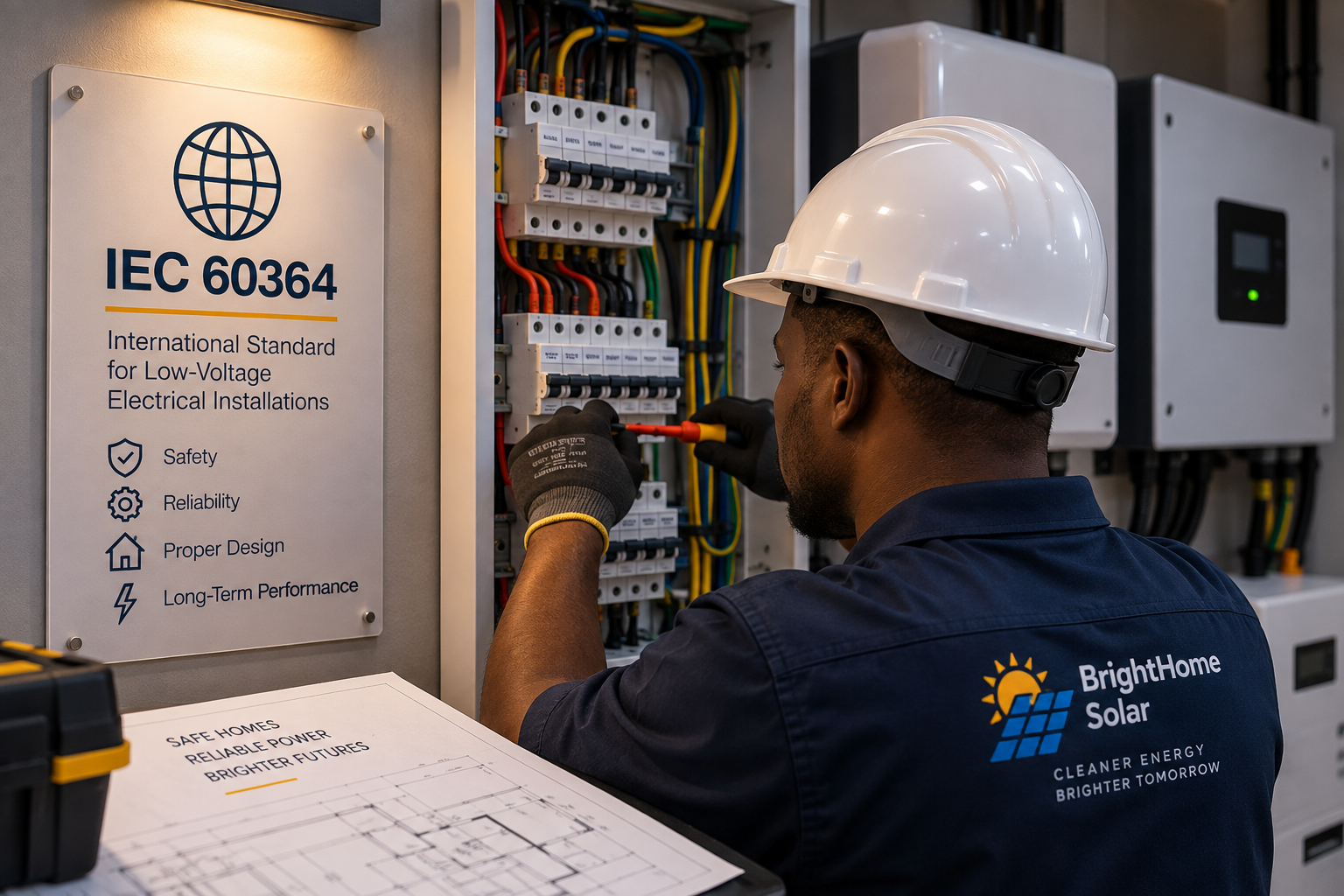
Every system to IEC 60364 and BS standards. Every drawing by a certified engineer. Every installation tested before handover. We never compromise — lives and livelihoods depend on the systems we build.
Data Before Decisions
We never guess when we can measure. IoT monitoring and analytics are the foundation of everything we do. If we cannot measure impact, we will not claim it.
Community Partnership
Mini-grids succeed when communities own them emotionally. We embed local operators, train energy champions, and build relationships before laying a single cable.
Climate Accountability
Every solar kilowatt is a litre of diesel not burned. We track and publish carbon displacement metrics on every project — aligned with Nigeria's NDC under the Paris Agreement.
Commercial Discipline
Impact and revenue are not in conflict. PAYG and subscription models create sustainability that outlasts any grant cycle. Commercial discipline makes our mission achievable at scale.
Africa-First Innovation
We build for Nigerian realities — FX volatility, supply chain complexity, regulatory challenges. Local insight earned through real project experience is our most valuable competitive advantage.
The Team Behind the Mission
Demilade Olujide Babajide
Founder & Chief Executive Officer
A certified engineer with deep expertise in energy systems design, solar-hybrid installations, and power optimisation. Demilade founded Energy Metrics Africa with a single conviction: that Nigerian engineering capability, properly deployed, can solve Nigeria's energy crisis from the bottom up. Under his leadership, the company has built an operational track record of 0.3MW inverter capacity, 500kWh of storage, and 0.6MWp of solar — all without external funding — while developing one of Nigeria's most ambitious community mini-grid expansion programmes.
Engineering Team
Solar & Power Systems
Our engineers design, specify, and commission every system to IEC/BS standards — from 5 KVA residential installations to 100 KW community mini-grid power plants.
Analytics & Monitoring
IoT & Data Intelligence
Real-time IoT dashboards, energy analytics, and performance reporting — turning raw power data into actionable efficiency insights for every client we serve.
Project & Commercial
Delivery & Partnerships
Project management, procurement, client relations, and business development — ensuring every commitment is delivered on time, within budget, and to specification.
Built on Standards
Our work meets Nigerian and international engineering standards, regulatory frameworks, and environmental requirements.
CAC Registered
Incorporated under the Companies and Allied Matters Act, Federal Republic of Nigeria.
COREN Aligned
Founder is a certified engineer under the Council for the Regulation of Engineering in Nigeria.
REA Compliant
Mini-grid development aligned with REA Regulations 2016 (amended 2021) and viability gap funding framework.
IEC / BS Standards
All electrical installations designed to IEC 60364 and relevant BS standards for safety and performance.
Paris Agreement
Carbon displacement reported in line with Nigeria's NDC under the UNFCCC framework.
NERC Regulatory
Operating within NERC's licensing framework for electricity generation and distribution.
World Bank DARES
Business model structured to qualify for the $750M World Bank DARES rural electrification programme.
SDG Reporting
Impact aligned with SDG 7 (Clean Energy), SDG 8 (Decent Work), and SDG 13 (Climate Action).
Let's Power Africa's Future Together
Whether you are a grant funder, impact investor, commercial client, or community leader — Energy Metrics Africa has a bankable, proven proposition ready for you.